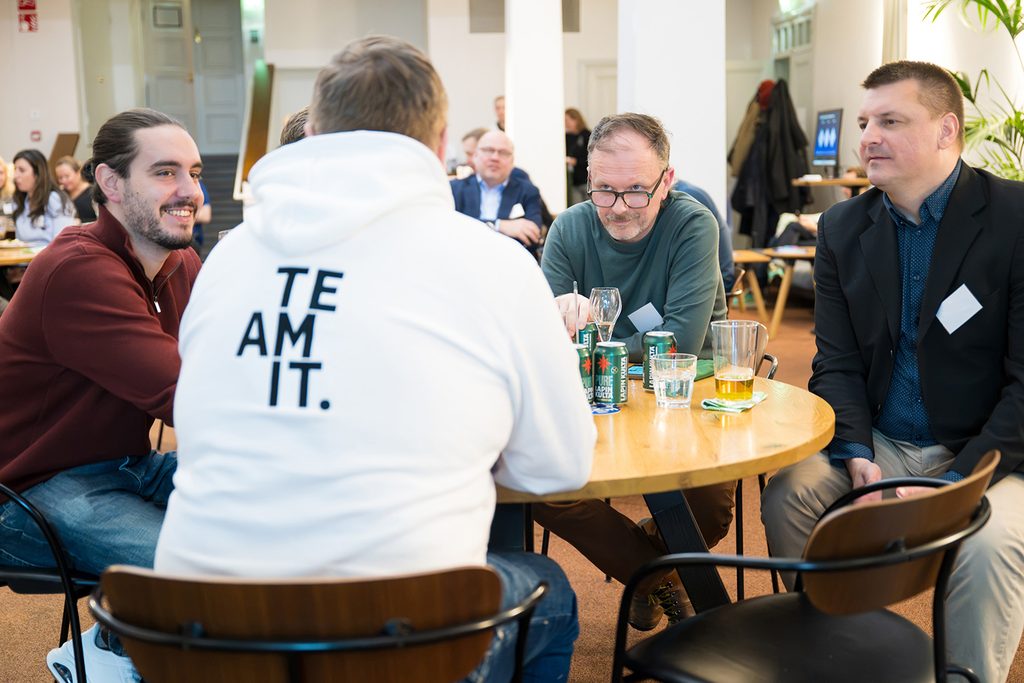

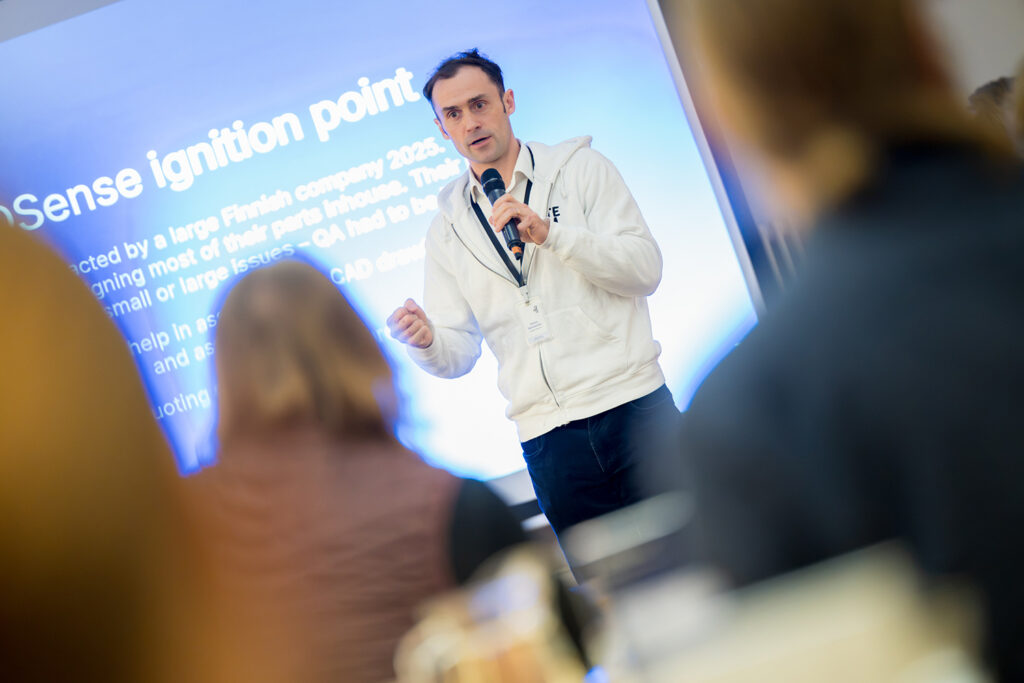
In the beginning of the Slush week 2026, Teamit gathered engineering and manufacturing decision-makers at Sofia Helsinki for an evening of futures thinking, AI and conversation. The question of the night: are you ready for what’s ahead?
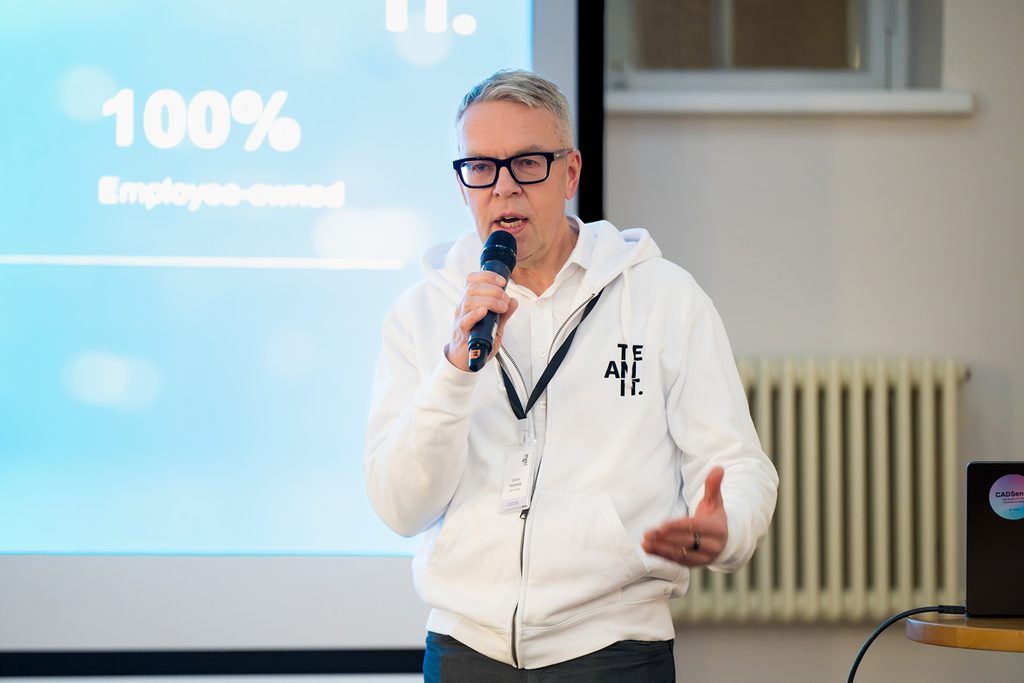
CEO Jussi Heikkilä opened Futures Readiness in Engineering & Manufacturing on Monday 16 November with a short look at Teamit’s journey into AI. The evening went on with two futurists and a live demo of CADSense, Teamit’s AI brain for technical drawings.
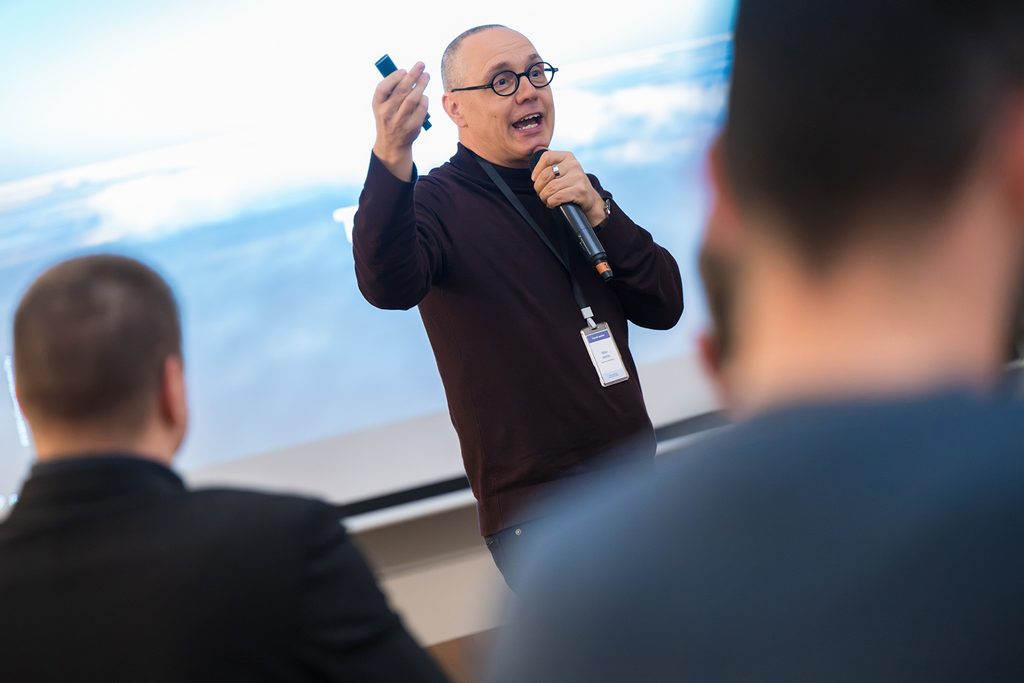
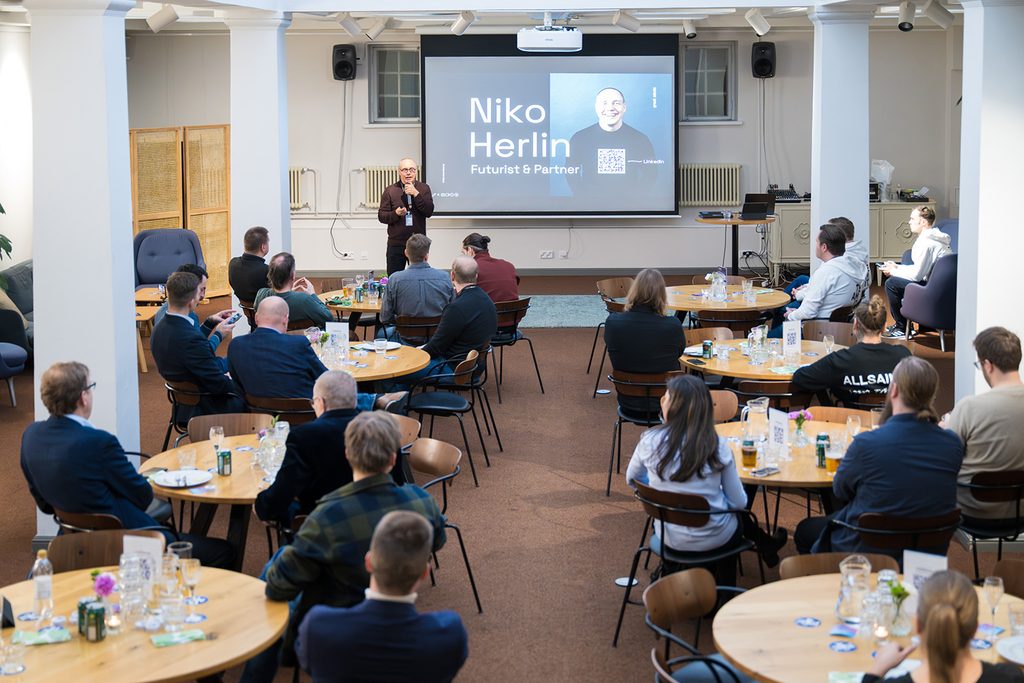
Niko Herlin: imagination is a strategic skill
Futurist Niko Herlin from Great Minds started with a small but important letter: the s in futures. The future can’t be predicted, he reminded the audience, so the point of foresight is to be ready whatever happens. That means looking at many possible futures, including ones that seem impossible today.
According to Herlin, the most common strategic mistake is to plan for “business as usual”, which is the least likely future of all. To see the alternatives, organisations need imagination, and the courage to say ideas out loud before they feel finished.
“If it doesn’t feel even a little bit awkward, then we are doing the wrong things,” Herlin said.
Just as important is knowing which future you actually want. Herlin encouraged leaders to dream big, share a clear vision, and back it up with persistence, strategy and culture. On AI, he offered a reframe: “Instead of artificial intelligence, we should call it assisting intelligence.” People shouldn’t try to compete with machines on efficiency, he argued. Our strengths lie in imagination, creativity and working together.
Herlin closed with change readiness: change isn’t only something that happens to us, it’s also something we create. “Experiments never fail if you reflect afterwards.”
Ira Stening: look at the signals you don’t like
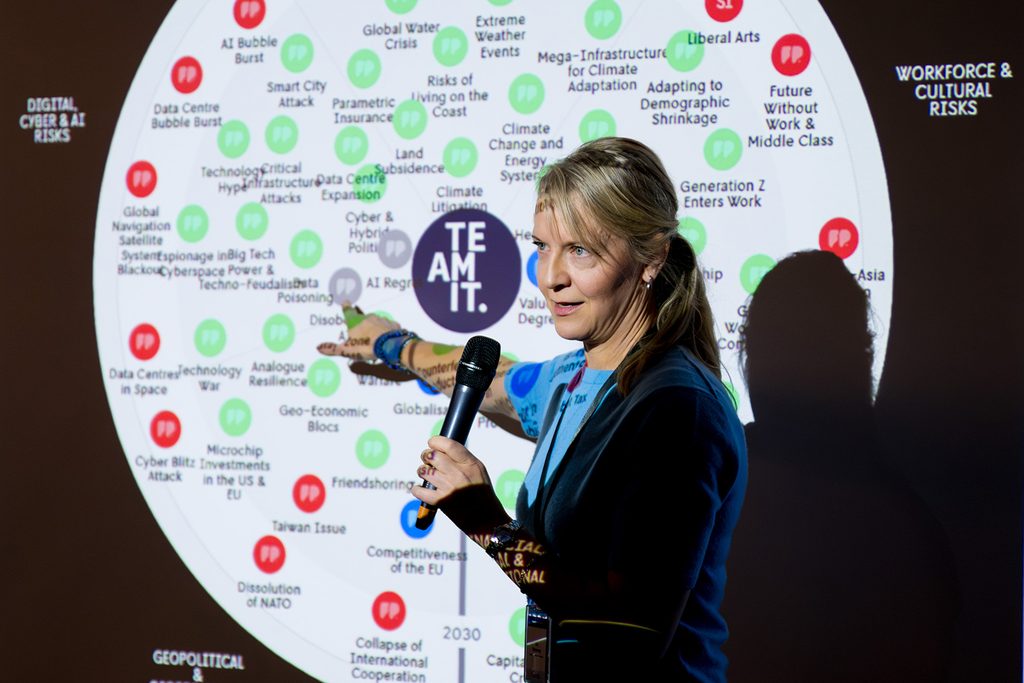
Ira Stening, a practical futurist at Futures Platform, moved from mindset to method. For the evening she had built a Futures of Industrial Risk radar, which guests opened on their phones with a QR code.
Stening shared three principles for futures-oriented analysis of the operating environment:
- Give attention to the signals you don’t like.
- Stretch your timeline beyond what feels comfortable.
- Look at the world from every angle: political, economic, social, technological, legal and environmental.
Guests then discussed at their tables which signals their own organisations should pay more attention to, and who in the organisation owns them. Data poisoning came out on top, followed by Generation Z entering working life, mental health, an AI bubble burst, and Big Tech and techno-feudalism.
“Your future is really yours to create,” Stening concluded. “But nothing ever changes unless you start acting on it.”
CADSense: the future in practice
After the futurists, it was time for something concrete. Teamit’s Commercial Director Niklas Nemlander described the challenges engineering companies face every day: checking drawings takes time, errors slip through into production, and senior experts spend much of their time reviewing other people’s work.
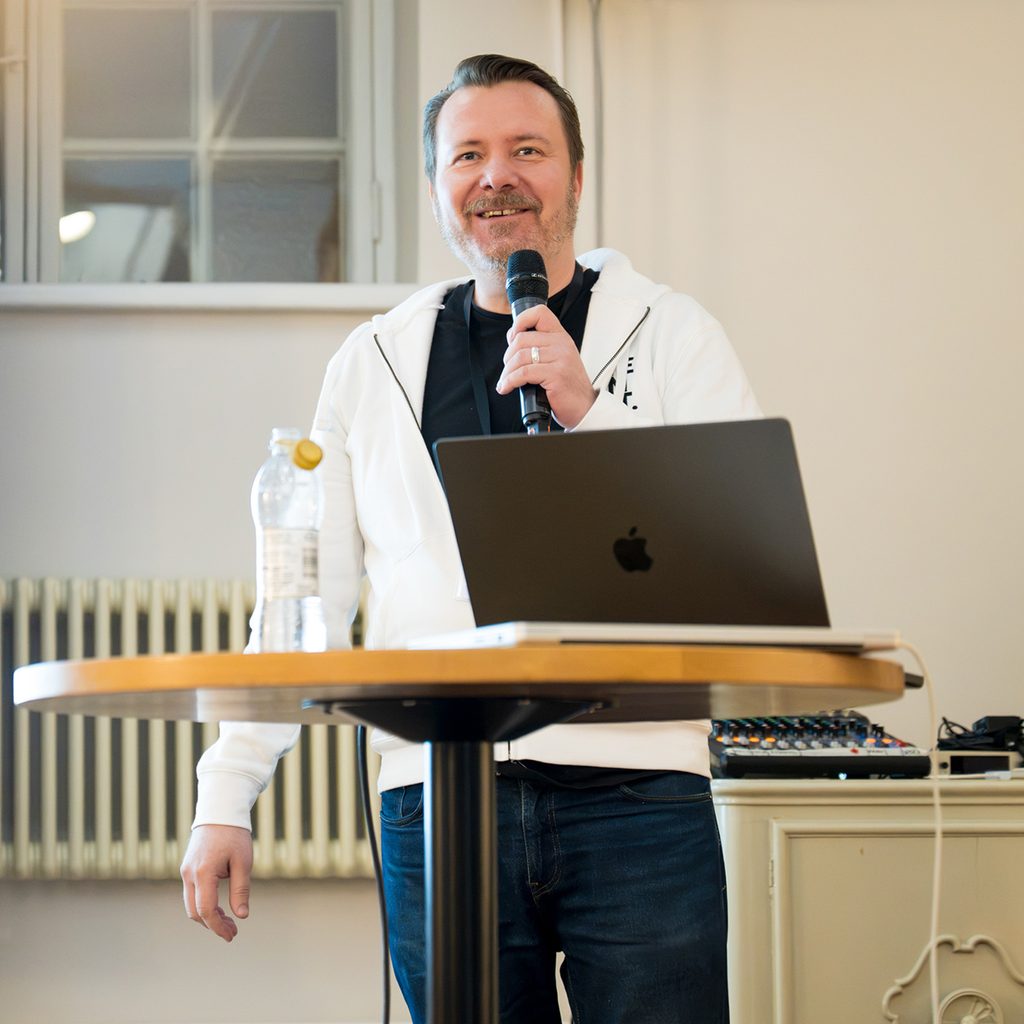
CADSense was built to tackle these problems. Chief Generative AI Officer Jarkko Lipponen showed live how CADSense analyses a technical drawing, finds deliberately planted errors and turns a request for quotation into a production plan and an offer, with the human in control at every step.
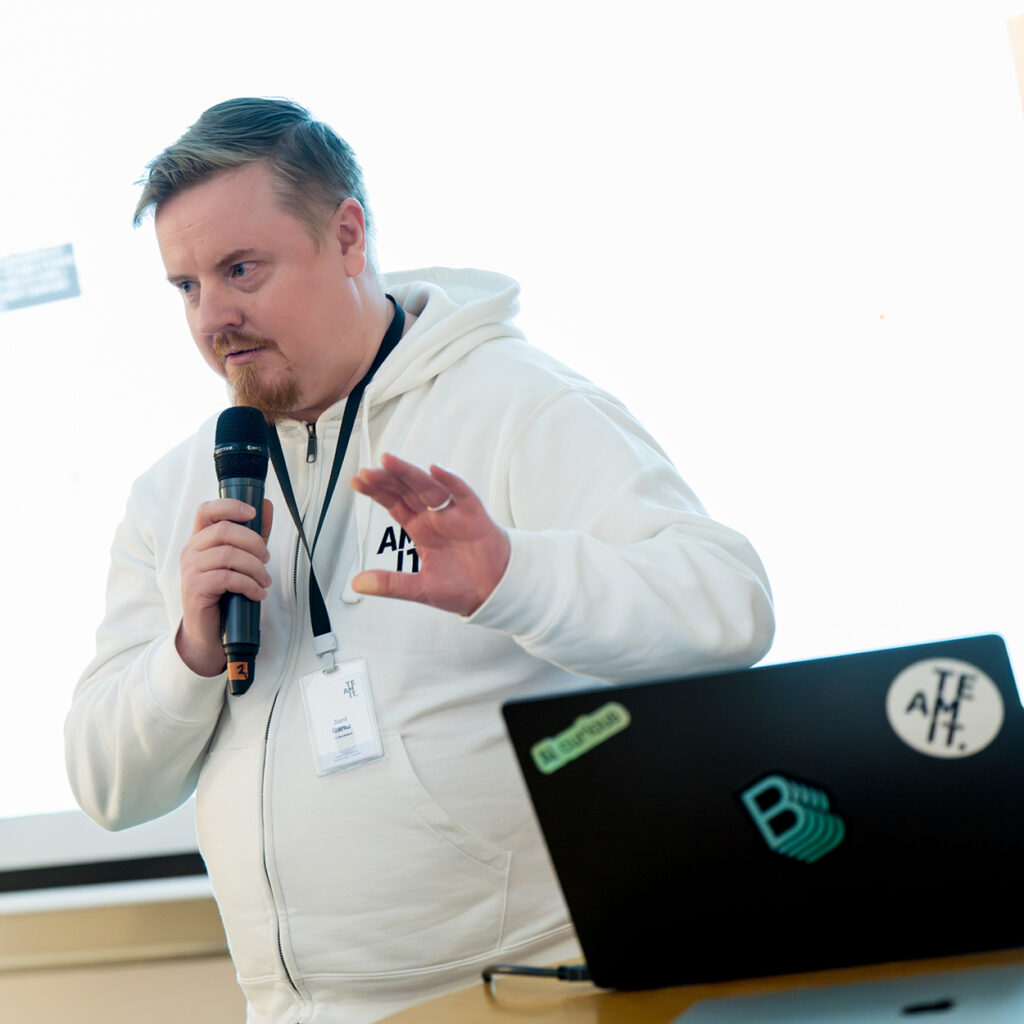
AI Architect Jani Ranta then previewed an upcoming capability: finding parts and assemblies in large archives by their geometry, even from an imperfect photo. As he summed up the idea behind CADSense: “Improve what you have, know what you have, find what you have.”
Curious how AI could speed up design work in your organisation? Read more about CADSense at teamit.fi/cadsense or get in touch, and we’ll gladly continue the conversation.